
Post-Tension Concrete in Buildings
ESPT offers an integrated service, from anchor and floor design to production and installation.
Prestressing by Post-Tensioning in the Building Sector
Contemporary architectural trends favor large uninterrupted floor areas and flexible internal layouts that are easy to modify and move around in, while being fundamentally durable and functional. These multiple requirements can be met through prestressing by post-tensioning, which allows for large unobstructed spans with a minimum number of columns and reduced floor thickness.
The prestressing systems can be used in floors, foundation slabs, and building transfer structures. They are a cost-effective, reliable solution for optimizing a wide range of structures.

Structural Slabs
Elevated slabs in buildings, from usual loads slabs to transfer slabs that support planted elements including transfer trusses.
Industrial Floors
Joint-free slab on grade that enables load transfer to ground for forklifts and other related industrial loads.
Slab on Grade
Joint-free slab on grade with large in-plan dimensions for taxiways and aircraft hangars.Benefits of Post-Tensioning in Buildings
- 01Complex geometryAchievement of complex geometry and special design challenges, meeting all the needs of modern architecture.
- 02Large column-free spacesSpans of up to 15 m are common in standard PT slabs.
- 03Shallower slabsPT slabs are up to 30% shallower, reducing the building height or allowing more floors within the original building height.
- 04Less materialsWith PT, less concrete and steel are needed for the superstructure.
- 05Programme and cost savingGroundwork requirements for a PT structure are reduced.
- 06Faster programmeThinner PT slabs and early strength stressing promote faster floor cycle times.
- 07Reduced maintenance costsStructures are more durable as PT promotes better crack and deflection/vibration control.
Bonded and un-bonded systems
Internal bonded post-tensioning
The bonded post-tensioning slab system consists of fully encapsulated, bonded multi-strand (two to five strands) tendons contained in flat ducts filled with a high-performance cementitious grout that bonds the strands to the surrounding concrete.
When the tendons have stretched sufficiently, according to the design specifications, they are wedged in position and maintain tension after the jacks are removed, transferring pressure to the concrete. The duct is then grouted to protect the tendons from corrosion.
Un-bonded post-tensioning
Adaptable to a variety of structures, un-bonded mono-strand post-tensioning can be easily, rapidly, and economically installed. It uses 0.5” and 0.6” diameter strands coated with a layer of specially formulated grease and an outer layer of seamless plastic extruded in one continuous operation to protect against corrosion. Each tendon is precisely coiled, cut, labelled, colour-coded, and delivered to the construction site.
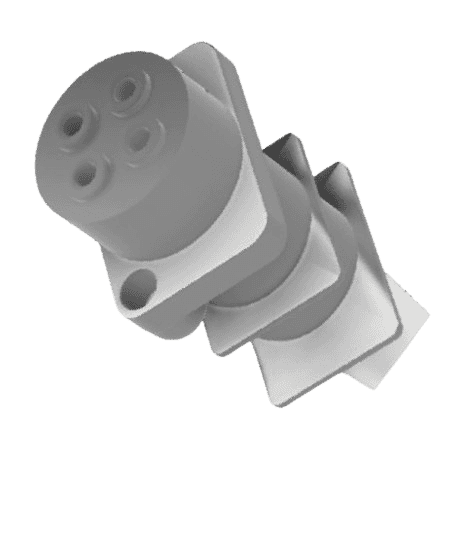
How a bonded tendon is anchored
Specifier tool
The bonded slab and multistrand systems described above all terminate in an anchorage like this one. Rotate the model, pull it apart with the slider, and click any component to see its role from stressing to grouting. The model shows a 12-strand system with 15.7 mm strands.
Have a slab layout? Get a PT alternative and price.
Send drawings or a BOQ. Your enquiry goes to the office in your country.