
Structural Bearings
ESPT offers design, supply, manufacturing, and installation of CE-marked European-approved spherical and POT bearings, featuring special sliding materials for temperatures up to +90 degrees Celsius.
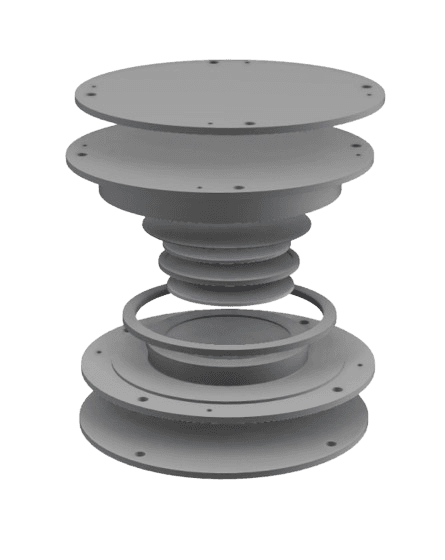
- Vertical load range, POT bearings
- 0 – 100,000 kN+
- Special sliding material rating
- +90 °C
- European approved
- CE marked
- Supplied and installed
- KSA · UAE · EG
Bearing types
Spherical Bearings
Spherical bearings consist of a convex spherical calotte with a sliding material that mates with a spherical sliding element. They can be combined with flat sliding elements and guides to form free and guided bearings, or with a restraining ring for fixed bearings. These bearings are ideal for structures with medium to high loads and limited installation heights, absorbing large rotations in all directions.
POT Bearings
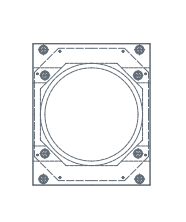
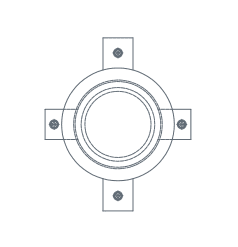
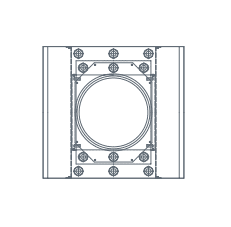
POT bearings accommodate differential movements in various structures, especially in bridge engineering. They handle vibrations, movements, and rotations caused by earthquakes, traffic loads, or climatic conditions while protecting the structure from damage.
Suitable for transmitting vertical loads from zero to over 100,000 kN.
Bridge Bearing Information
Bridge bearings are essential components in bridge construction, designed to facilitate movement and transfer loads between the bridge's superstructure (deck) and substructure (piers or abutments).
Functions of Bridge Bearings
- Load Transmission: Bearings transfer vertical loads from the bridge deck to the supporting structure. They also handle dynamic forces like wind, traffic, and seismic activity.
- Movement Accommodation: Bearings allow controlled movement due to thermal expansion, contraction, and shrinkage of materials. They also accommodate rotational movements caused by changes in alignment or external forces.
- Vibration Isolation: Some bearings are designed to dampen vibrations, improving the bridge's stability and longevity.
Types of Bridge Bearings
- Elastomeric Bearings: Made of rubber, these bearings allow movement through elastic deformation. They are cost-effective and require minimal maintenance.
- Sliding Bearings: These bearings have flat or spherical sliding surfaces to allow horizontal and rotational movement. Modern sliding bearings often use materials like PTFE for smooth operation.
- Fixed Bearings: These bearings allow rotation but restrict other forms of movement, providing stability.
Sliding materials are specialized substances designed to reduce friction and wear in applications where surfaces move against each other.
Key Characteristics
- Low Friction: Sliding materials are engineered to have a low coefficient of friction, ensuring smooth movement and reducing energy loss.
- Wear Resistance: These materials are durable and can withstand repeated use without significant degradation.
- Chemical Resistance: Many sliding materials are resistant to chemicals, making them suitable for harsh environments.
Sliding Materials for Bearings
- Fluoropolymers (e.g., PTFE): Known for their low friction and excellent wear resistance. Commonly used in spherical and cylindrical bearings for bridges and structural applications.
- High-Strength Composites: Materials like SMS are engineered for exceptional strength and durability, often used in bearings for structures requiring large sliding movements, such as suspension bridges.
- Advanced Steel Alloys: Special Fe-C-N composite materials are heat-treated for high wear resistance and durability.
The placement of bridge bearings is a critical step in bridge construction, ensuring proper load transfer and accommodating movements.
Placement Guidelines
- Preparation: The bearing area on the substructure (piers or abutments) must be levelled and cleaned to ensure a smooth surface. A bedding layer, often made of mortar or neoprene pads, is applied to provide uniform support.
- Alignment: Bearings must be precisely aligned to match the design specifications, ensuring they can accommodate movements like expansion, contraction, and rotation.
- Fixing: Bearings are secured to the substructure using bolts, dowels, or adhesive materials, depending on the type of bearing.
After Placement
- Testing: After placement, bearings are tested for functionality, including their ability to handle loads and movements.
- Maintenance Access: Bearings should be placed in a way that allows easy access for inspection and maintenance.
Bridge bearing replacement is a complex process that involves removing old or damaged bearings and installing new ones to restore the bridge's functionality and safety.
Steps in Bridge Bearing Replacement
- Inspection and Assessment: Engineers inspect the existing bearings to determine the extent of wear or damage.
- Bridge Jacking: Hydraulic jacks are used to lift the bridge deck slightly, relieving pressure on the bearings.
- Removal of Old Bearings: The damaged bearings are carefully removed, ensuring minimal disruption to the surrounding structure.
- Installation of New Bearings: New bearings are aligned and installed according to design specifications.
Challenges
- Safety: Lifting the bridge deck requires precise control to prevent accidents.
- Access: Bearings in hard-to-reach areas may require specialized equipment.
- Environmental Factors: Weather conditions can impact the replacement process.

For bridge owners
Bearing and joint replacement
Inspection, bridge jacking, removal, installation and testing, delivered with ESPT lifting frames.
Book an inspectionPlanned specifier tool
Bearing selector
Enter vertical load, movement and rotation to get a recommended type and an indicative size for your schedule.
Discuss your project with ESPT
Send drawings or a BOQ. Your enquiry goes to the office in your country.